
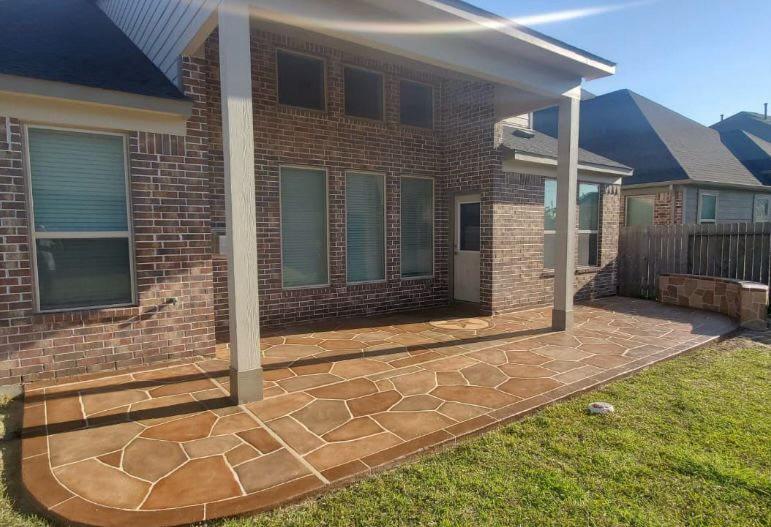
A patio can be one of the most useful parts of a home, especially when you enjoy spending time outdoors, entertaining family and friends, or simply want more room to relax in your backyard. However, many homeowners eventually realize that the patio they originally had built is no longer large enough for the way they use their outdoor space. A small concrete area that once accommodated a couple of chairs may not provide enough room for a dining table, outdoor kitchen, grill, fire feature, or growing family.
That is when many homeowners begin researching the patio extension cost and wondering whether it makes more sense to expand what they already have or start over with an entirely new outdoor living area.
The cost of extending a patio can vary considerably because no two backyards are exactly alike. The size of the extension, the material you choose, the condition of the existing patio, site preparation, drainage requirements, and labor can all affect the final investment. A simple concrete addition may be relatively straightforward, while a larger project involving excavation, grading, decorative finishes, or structural features can require more planning.
Understanding these factors before beginning your project can help you make better decisions and create an outdoor space that works for your home both now and in the future.
What Is the Average Patio Extension Cost?
There is no single price that applies to every patio project. The patio extension cost depends largely on how much additional space you want to create and what needs to happen before the new patio can be installed.
For example, extending a small, level concrete patio into an open backyard may require less preparation than expanding a patio where the ground slopes, drainage is poor, or existing landscaping needs to be removed. The type of material also makes a significant difference. Standard concrete, decorative concrete, pavers, natural stone, and other materials can have very different installation requirements and costs.
Instead of focusing only on the initial price, homeowners should consider what is included in the project. A professional estimate may account for site preparation, excavation, grading, base preparation, materials, labor, finishing, and cleanup.
The best way to understand the actual cost for your property is to evaluate the existing patio and the surrounding area. A contractor can identify potential challenges before construction begins and help you determine the most practical approach for expanding your outdoor space.
What Affects the Cost to Expand a Patio?
Several factors can influence the cost to expand a patio, and understanding them can help explain why one project may cost more than another.
The Size of the Extension
The amount of additional square footage is one of the most obvious factors. A small extension designed to create space for a grill and a few chairs will generally require fewer materials and less labor than a large backyard expansion designed for entertaining.
However, larger projects do not always increase at exactly the same rate per square foot. Some costs, such as equipment setup and site preparation, may be necessary regardless of project size.
Before deciding how large your extension should be, think about how you plan to use it. Consider furniture, walking space, outdoor cooking areas, and how many people typically use the backyard.
The Material You Choose
The material used for the extension plays an important role in the overall cost. Concrete is a popular choice because it is durable, versatile, and can be finished in several ways.
A basic concrete addition may have different requirements than decorative or stamped concrete. Pavers and natural stone can also create attractive outdoor spaces but may involve additional materials and installation steps.
When comparing materials, homeowners should look beyond appearance. Maintenance requirements, durability, drainage, and how well the new material works with the existing patio should also be considered.
Site Preparation
Before construction begins, the area may need to be cleared and prepared. This could involve removing grass, landscaping, old materials, or sections of damaged concrete.
The soil may also need to be excavated and graded. Proper preparation is important because a patio needs a stable foundation. Skipping necessary preparation can lead to settling, cracking, or drainage problems later.
Drainage and Grading
Drainage is particularly important when planning a patio extension. Water should be directed appropriately rather than collecting against the home or pooling on the patio.
If the property has uneven ground or existing drainage issues, additional grading or drainage work may be necessary. While this can add to the initial project cost, addressing drainage during construction can help prevent more expensive problems later.
What Is the Concrete Patio Extension Cost?
A concrete patio extension cost can vary depending on the size and complexity of the project. Concrete remains a popular option because it can create a clean, durable surface suitable for many different outdoor spaces.
One important consideration is whether the new concrete will connect directly to an existing concrete patio. The existing slab should be evaluated to determine its condition. If the old patio is significantly cracked, sinking, or structurally compromised, simply adding new concrete beside it may not solve the underlying problem.
The new section also needs proper preparation and reinforcement based on the project requirements. A professional contractor can determine the appropriate construction method and help ensure the new addition is properly supported.
Homeowners should also remember that new concrete may not look exactly like older concrete. Existing concrete changes color over time because of weather exposure, use, and natural aging. Even when the same material is used, there may initially be a visible difference between the old and new sections.
Can You Extend an Existing Patio?
In many situations, it is possible to extend an existing patio. However, the best approach depends on the condition of the current patio and the property itself.
Before construction begins, it is important to inspect the existing surface. If the patio is level, stable, and in good condition, expanding it may be relatively straightforward. If it has significant cracks, drainage problems, or settlement issues, those concerns should be addressed before adding more space.
The transition between the old and new sections also requires careful planning. Homeowners generally want the finished patio to feel like a cohesive outdoor space rather than two unrelated sections placed next to each other.
The design can help achieve this. Matching the shape, finish, layout, and surrounding landscaping can make an extension feel more integrated with the existing patio.
How Do You Extend a Concrete Patio?
When homeowners want to extend an existing concrete patio, the process usually begins with evaluating the existing slab and preparing the new construction area.
The general process may include:
- Measuring and planning the new patio area
- Removing grass or other materials
- Excavating the area as necessary
- Preparing and compacting the base
- Establishing appropriate grading and drainage
- Installing forms
- Preparing reinforcement when required
- Pouring and finishing the concrete
- Allowing the new surface to cure properly
Every property is different, so the exact process can vary. Soil conditions, elevation changes, existing landscaping, and the design of the new patio can all affect the project.
A properly planned extension is important because the goal is not simply to create more concrete. The new space should be functional, stable, and designed to work with the rest of the backyard.
Is Adding Onto an Existing Patio Better Than Building a New One?
Adding onto an existing patio can be a practical solution when the current patio is structurally sound but simply too small.
Extending the existing space may allow homeowners to improve their backyard without completely removing and rebuilding the original patio. It can also provide flexibility when creating separate areas for different activities.
For example, an extension might create room for:
- Outdoor dining
- Additional seating
- A grilling area
- A fire feature
- An outdoor entertainment space
- Space for family gatherings
However, an extension may not always be the best option. If the existing patio has major structural problems or no longer fits the homeowner’s needs, rebuilding the entire area could sometimes provide a better long-term solution.
The right choice depends on the condition of the existing patio and the homeowner’s goals.
How Large Should a Backyard Patio Extension Be?
A backyard patio extension should be designed around how you plan to use the space rather than simply making it as large as possible.
Start by considering your outdoor furniture and activities. A patio used primarily for two chairs and a small table will have different space requirements than one designed for large gatherings.
Think about how people will move around the area. There should be enough room to pull out chairs, walk around furniture, and comfortably access doors, grills, and other features.
It is also helpful to think about future needs. If you plan to add an outdoor kitchen, pergola, fire pit, or larger furniture later, planning for that space during the extension may be easier than modifying the patio again in the future.
Can You Match New Concrete to an Existing Patio?
Many homeowners want their patio extension to match the original surface as closely as possible. While contractors can select similar materials and finishes, it is important to understand that perfectly matching old and new concrete can be difficult.
Older concrete has been exposed to sunlight, rain, foot traffic, and environmental conditions. Over time, its appearance naturally changes.
New concrete will initially look newer and may have a different shade. The difference may become less noticeable as the new surface ages, but homeowners should have realistic expectations.
A professional design can help minimize the visual difference. Decorative borders, intentional layout changes, or complementary finishes can sometimes make the transition look more intentional and attractive.
Is It Worth Expanding Your Patio?
For many homeowners, the cost to expand a patio can be worthwhile when the existing outdoor area no longer provides enough usable space.
A larger patio can make the backyard more functional and create an area for relaxing, entertaining, and spending time with family. It can also improve the connection between indoor and outdoor living spaces.
The key is designing the extension around your actual needs. Instead of adding square footage simply for the sake of making the patio larger, think about how the additional space will be used.
A well-planned extension should provide a purpose. Whether that means creating an outdoor dining area, expanding space for guests, or building a more comfortable place to relax, the design should support the way you live.
Planning Your Patio Extension With IG Remodeling
The patio extension cost depends on much more than the amount of concrete or material used. The condition of your existing patio, the size of the expansion, site preparation, drainage, materials, and design can all influence the scope of the project.
Before adding on to an existing patio, it is important to evaluate the entire outdoor space. A properly planned project can help create a smoother transition between the old and new areas while addressing important concerns such as drainage, grading, and long-term durability.
At IG Remodeling, we understand that every backyard and patio project is different. Whether you are considering a small backyard patio extension or planning to significantly expand your outdoor living space, careful planning is the first step toward creating a patio that fits your needs.
If you are thinking about extending your existing patio, working with an experienced remodeling and construction professional can help you understand your options and determine the best approach for your property.